- Front Page
- Politica
- Local
- Internacional
- Deporte
- Analisis
- Investiga
- Live
- LenguahePapiamento

- Vroegop ta sostene paro: “Pashentnan no mester bira victima di e wega financiero”
- Crisis den coalicion hulandes despues di acuerdo di impuesto sin VVD
- Opinion: Horacio Oduber Hospital of Hospital Horacio Oduber?
- Directie Infrastructuur en Planning ta habri inscripcion pa 231 kavel di Carnaval 2027
- Declaracion di inkomstenbelasting 2025 disponibel online entrante 16 di november
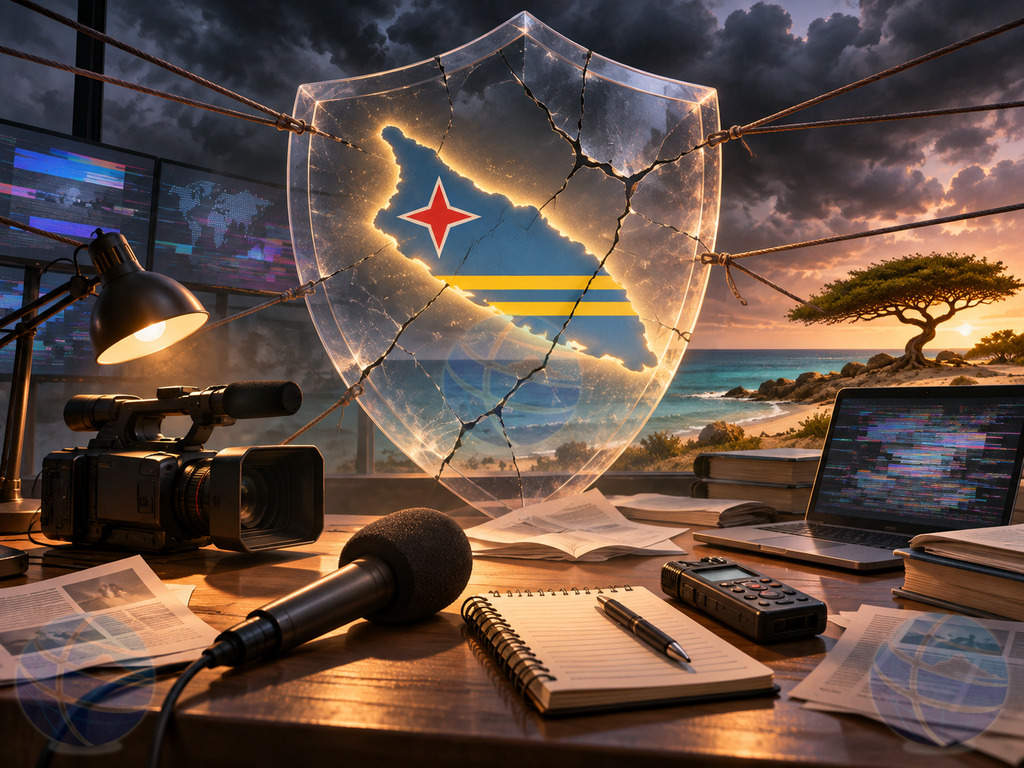
Council for Culture warns: Independent journalism in Aruba is vulnerable
ORANJESTAD — Press freedom and the future of independent journalism in Aruba face serious threats, including dependence on social media, insufficient financial resources, disinformation, and the influence of modern technology. These concerns are highlighted in a report by the Dutch Council for Culture (Raad voor Cultuur), titled Vrije journalistiek, weerbare democratie (Free Journalism, Resilient Democracy), in which the council explicitly calls on the Government of Aruba to protect and strengthen independent journalism.
According to the report, the state of journalism in the Caribbean part of the Kingdom is more concerning than in the European Netherlands. The islands have limited journalistic infrastructure, few opportunities for professional training, and a heavy dependence on platforms such as Facebook for news distribution.
This dependence creates a serious economic problem. While news organizations produce information, international platforms control its distribution and capture a large share of the economic value generated. The expansion of artificial intelligence (AI) is increasing this pressure, particularly when journalistic content is reproduced without attribution or compensation.
The report specifically mentions Aruba, including the establishment of the Red Arubiano di Prensa Profesional (RAPP), founded in 2024, as a notable exception in the region. The organization promotes the independent practice of journalism and adheres to the ethical standards of the Dutch Association of Journalists (Nederlandse Vereniging van Journalisten).
Another major concern is political influence and disinformation. According to the Council for Culture, the Caribbean region is vulnerable to disinformation campaigns, including influence originating from Venezuela, China, and Russia. The council emphasizes that independent journalism is essential for holding political power accountable, informing the public, and protecting democracy.
The Council for Culture recommends making the strengthening of journalism in the Caribbean an official agenda item at the Vierlandenoverleg, the four-country ministerial consultations involving the Netherlands, Aruba, Curaçao, and Sint Maarten.
The council proposes examining structural financial support, professional training, innovation, and measures to strengthen independent media organizations. However, it stresses that any support system must operate at arm's length from the government to prevent political interference in editorial content.
For Aruba, the central message is that press freedom depends on more than simply having the legal right to publish news. It also requires financially sustainable media organizations, professional journalists, and an environment in which the press can investigate and scrutinize the government without interference.
The report concludes that weakened journalism endangers the functioning of democracy and that protecting independent journalism must be regarded as a public responsibility.