- Front Page
- Politica
- Local
- Internacional
- Deporte
- Analisis
- Investiga
- Live
- LenguahePapiamento

ACF restores Aruba’s habitats by helping nature recover naturally
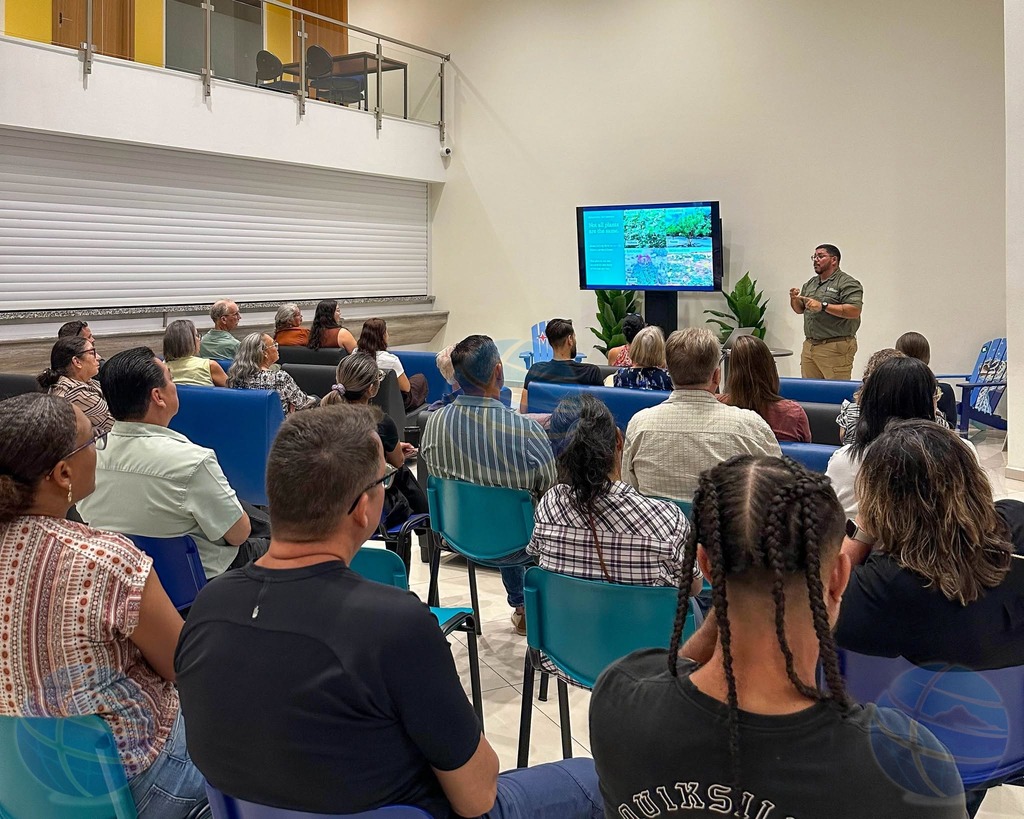
ORANJESTAD — Aruba Conservation Foundation (ACF) dedicated the latest edition of its Naturalesa ta Papia: Knowledge Encounter program to terrestrial habitat restoration and nature’s ability to recover when the pressures preventing natural regeneration are reduced.
During sessions at MFA Paradera and Teresita Center San Nicolas, ACF explained how Aruba’s landscapes have changed over time due to human-related pressures, including free-roaming goats, donkeys and horses, invasive plants, soil disturbance, erosion, drought and loss of natural seed sources.
One of the main messages was that ecological restoration does not necessarily mean planting more trees. The process begins by assessing the condition of an ecosystem, identifying what is preventing recovery and determining what level of intervention is actually needed.
ACF applies the Assisted Natural Regeneration (ANR) approach, which focuses on removing or reducing pressures, protecting vegetation that is already regenerating and allowing nature to recover with only the assistance that is necessary. Continuous monitoring is used to determine whether the ecosystem is improving.The method is already being applied at Aima Coa in Arikok National Park, where about 3.6 hectares of dry savanna form part of ACF’s first ANR pilot project. The organization expects it may take at least five years before clear signs of recovery can be observed.
ACF stressed that the community can also contribute by choosing native plants, preventing the spread of invasive species, protecting naturally regenerating vegetation and keeping grazing animals such as goats under control.
According to ACF, the basic principle is simple: before restoring nature, it must first be protected. Every habitat Aruba protects today is one that may not need restoration tomorrow.