- Front Page
- Politica
- Local
- Internacional
- Deporte
- Analisis
- Investiga
- Live
- LenguahePapiamento

- RAPP ta pone etica y uzo practico di AI den periodismo central na seminario
- Heyliger (AVP): Norma salarial mester permiti Aruba retene profesionalnan
- Gerlien Croes: Ley pa limita salario halto no mester laga Aruba sin profesional
- E pakico flexibilisacion di LNT por afecta control salarial y relacion cu Hulanda
- Sospechoso di 15 aña deteni despues cu dos hoben a wordo hinca
- RAPP ta pone etica y uzo practico di AI den periodismo central na seminario
- Heyliger (AVP): Norma salarial mester permiti Aruba retene profesionalnan
- Gerlien Croes: Ley pa limita salario halto no mester laga Aruba sin profesional
- E pakico flexibilisacion di LNT por afecta control salarial y relacion cu Hulanda
- Sospechoso di 15 aña deteni despues cu dos hoben a wordo hinca
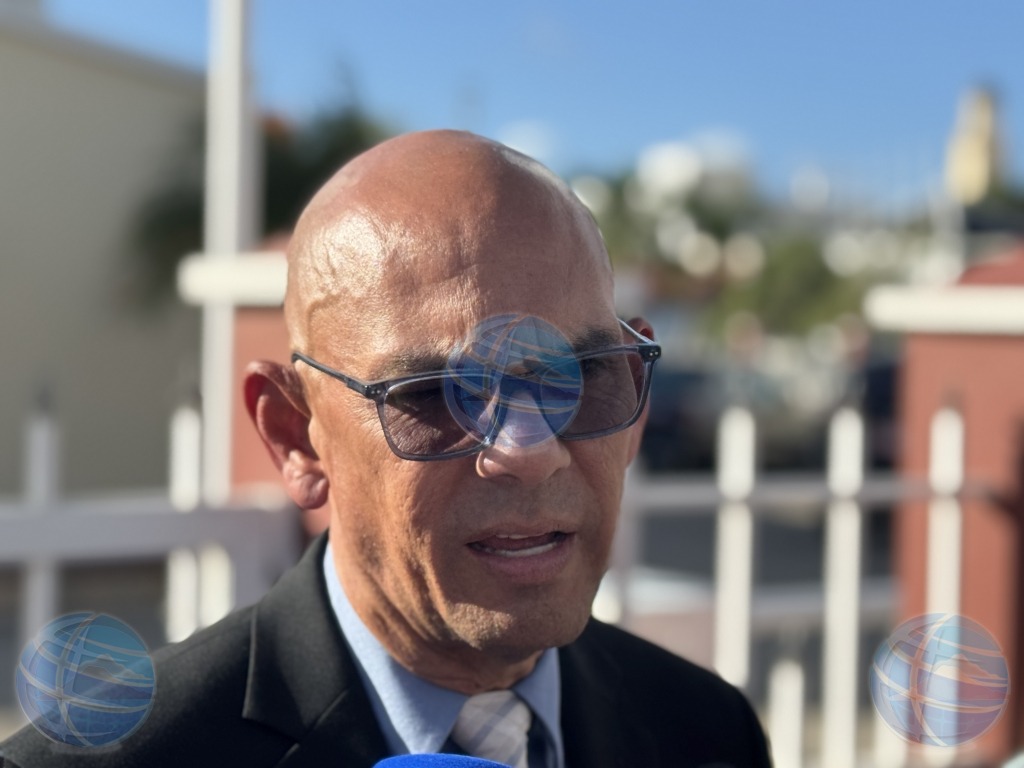
Oduber rejects verdict and accuses judicial system of “double standards”
ORANJESTAD — Former minister Otmar Oduber held a press conference on Monday morning, accompanied by his lawyers, to respond to the ruling of the Joint Court of Justice in the Flamingo case. The Court sentenced him to two years’ unconditional imprisonment and barred him for five years from holding public office or being elected to a representative body.
Oduber said that although he respects the judges’ decision, he does not accept the outcome.
“I will respect the decision made by the judge, but I will never accept this decision. It is not only an abuse, but also unquestionably unjust,” Oduber declared.
According to the former minister, the Court failed to sufficiently assess the administrative and political context in which the decisions at issue in the case were made. He argued that practices regarded as normal within the public administration for many years are now being interpreted as criminal acts.
“They are taking something that was always considered normal and turning it into something criminal, simply to convict yet another minister,” he said.
Oduber argued that established working practices within government are directly connected to the continuity, stability and quality of services provided to citizens. According to him, the Court did not sufficiently consider this reality when assessing his conduct as minister.
CRITICISM OF THE COURT’S REASONING
During the press conference, Oduber questioned several aspects of the reasoning used in the judgment. According to him, the Court repeatedly uses phrases such as “the Court considers” or “the Court believes,” which, in his view, indicates that the conviction is based on interpretation rather than concrete evidence.
The former minister insisted that the Public Prosecutor’s Office had failed to prove that he committed fraud or received money or any other personal benefit in exchange for favors.
“They were unable to prove any fraud committed by me. The only thing they have against me is that I helped people find work,” Oduber said.
He added that during his term as minister, he helped people secure employment both within the government apparatus and in the private sector. According to him, the individuals concerned followed the required procedures and applied for positions for which vacancies existed.
Oduber rejected the interpretation that political support expressed following an appointment automatically constituted compensation for the assistance received. He said some of the individuals told third parties that they would support him, but never made such a promise directly to him as a condition for obtaining employment.
ACCUSATION OF “DOUBLE STANDARDS”
Oduber also accused the judicial system of applying double standards. As an example, he mentioned requests that, according to him, Dutch and European officials had made to the government for work such as road paving near the Public Prosecutor’s Office and at the residence intended for the Governor.
He questioned why such requests are considered acceptable while a similar request involving an Aruban citizen—whom he identified as Rubiano—is interpreted as an abuse of office.
“What is happening here is disgraceful. Dutch and European people do the same things here in Aruba,” Oduber said in one of the strongest moments of the press conference.
The former minister also referred to Article 119 and legal amendments approved by Parliament concerning the manner in which political officeholders may be investigated and criminally prosecuted. According to him, the government has still not arranged the implementation required for the law because it fears a reaction from the Netherlands.
THE FLAMINGO CASE AND THE PREVIOUS VERDICT
The Flamingo case concerns actions taken during the 2017–2019 period, when Oduber served as Minister of Spatial Planning, Infrastructure and the Environment.
The case consists of several separate files, including the Malmok dossier, concerning the allocation of two long-lease plots of land, and the case involving the two so-called “ghost civil servants,” Thiel and Phillips.
The Court did not consider all the allegations in the Malmok dossier proven. It did, however, find that Oduber abused his position during the land-allocation process and that the Country of Aruba was defrauded through the arrangement involving the two employees.
In January 2025, the Court of First Instance sentenced Oduber to one year in prison, of which 319 days were suspended, along with 240 hours of community service. Both Oduber and the Public Prosecutor’s Office appealed the judgment. Oduber sought a complete acquittal, while the prosecution considered the sentence too lenient and demanded three years’ unconditional imprisonment.
On appeal, the Court increased the sentence to two years’ unconditional imprisonment. Oduber was also barred for five years from holding public office or being elected to a representative body.
CASSATION APPEAL STILL UNDER CONSIDERATION
Oduber has not yet confirmed whether he will appeal in cassation. He acknowledged that the decision is difficult, both emotionally and financially.
“At some point, you run out of fuel, and we have already spent a great deal of money,” he said.
The former minister will seek legal advice before making a final decision. He emphasized, however, that he would not pursue a cassation appeal merely to gain time. According to him, he will take that next step only if his lawyers conclude that there is a genuine possibility of having the judgment overturned.
Oduber and the Public Prosecutor’s Office have two weeks from the date of the judgment to file a cassation appeal.