- Front Page
- Politica
- Local
- Internacional
- Deporte
- Analisis
- Investiga
- Live
- LenguahePapiamento

- RAPP ta pone etica y uzo practico di AI den periodismo central na seminario
- Heyliger (AVP): Norma salarial mester permiti Aruba retene profesionalnan
- Gerlien Croes: Ley pa limita salario halto no mester laga Aruba sin profesional
- E pakico flexibilisacion di LNT por afecta control salarial y relacion cu Hulanda
- Sospechoso di 15 aña deteni despues cu dos hoben a wordo hinca
- RAPP ta pone etica y uzo practico di AI den periodismo central na seminario
- Heyliger (AVP): Norma salarial mester permiti Aruba retene profesionalnan
- Gerlien Croes: Ley pa limita salario halto no mester laga Aruba sin profesional
- E pakico flexibilisacion di LNT por afecta control salarial y relacion cu Hulanda
- Sospechoso di 15 aña deteni despues cu dos hoben a wordo hinca
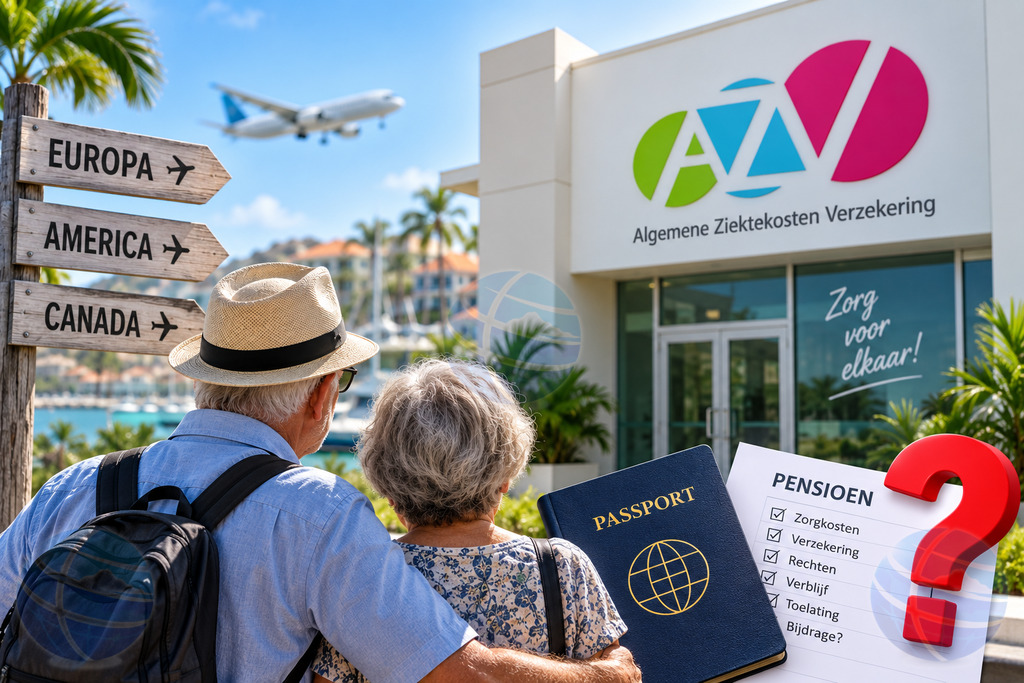
Foreign retirees raise another major question for AZV
ORANJESTAD — While the discussion surrounding the financial situation of AZV and Horacio Oduber Hospital often focuses on care for undocumented persons, there is another factor that deserves serious attention: the immigration of older people who settle in Aruba and, after meeting the legal conditions, can enter the general AZV system even though they never contributed to it during their working years.
Noticiacla’s research shows that this concern is not merely theoretical. In its own 2024 annual report, UO AZV explicitly mentions immigration as a factor that must be monitored closely because of its potential impact on healthcare spending. In the same document, AZV warns that an ageing population leads to higher medical costs and greater pressure on the healthcare system.
HOW THE SYSTEM WORKS
The key issue is how the system operates. A person from abroad who wants to settle in Aruba as a pensioner or person of independent means can apply for a residence permit. According to DIMAS, a pensioner with guaranteed income must be at least 55 years old and have, among other possible options, a guaranteed pension or annual income of at least Afl. 50,000 from certain annuities or investments.
Once that person is registered with the Civil Registry, has Aruba as their principal residence and, where applicable, holds a valid residence permit, they may fall under AZV.
AZV itself confirms that entitlement to insurance is tied to residence and registration, not to the number of years a person has historically contributed to the fund.
SUSTAINABILITY OF THE SYSTEM
This raises a fundamental question about the sustainability of the system: is it sufficient for someone to enter the system at an advanced age, after spending most of their working life in another country, and immediately gain access to the same healthcare package as someone who contributed in Aruba for decades?
The issue must be approached carefully. It is not accurate to say that a foreign pensioner “pays nothing.” Once insured and liable for premiums, the person must contribute according to income. In addition, like every consumer in Aruba, the person contributes indirectly through the BAZV levy on goods and services. AZV itself explains that BAZV is a source of revenue for the fund and that even tourists contribute in this way.
But there is an important difference between current contributions and a history of contributions.
A local resident who worked in Aruba for 30 or 40 years contributed throughout the period when, statistically, their healthcare costs were probably relatively low. A newly arrived pensioner may enter the system precisely at an age when the risk of chronic illness, hospitalization, long-term medication and other expensive treatment increases.
AZV, however, is not an individual savings account in which each insured person only withdraws what they personally paid in. It is a collective solidarity system in which contributions from the entire community finance the care of those who need it.
The issue has become even more relevant following this year’s premium changes.
Since January 1, 2026, pensioners aged 65 and older pay 0% AZV premium on the first Afl. 30,000 of income. Only the portion above Afl. 30,000 is charged at 10.5%, with a maximum annual premium of Afl. 5,775. In 2025, that maximum was Afl. 7,275.
For example, according to information obtained by Noticiacla, a pensioner with annual income of Afl. 56,000 pays Afl. 2,730 in AZV premiums in 2026. A pensioner earning Afl. 30,000 or less pays no AZV premium on that income under the current rules.
At the same time, AZV coverage includes general practitioners, specialists, hospital care, medication on the positive list, medical aids and, with approval, even treatment abroad.
The financial scale is considerable. AZV manages around Afl. 440 million per year. In 2024 alone, hospital admissions and nursing care cost Afl. 197.1 million, medicines and other pharmaceutical products Afl. 57.7 million, care at IMSan Afl. 55 million and medical treatment abroad Afl. 42.7 million.
The insured population is also growing in the age groups where healthcare generally costs more. At the end of 2024, AZV had 108,287 insured persons. Of these, 20,689 were aged 65 or older, equivalent to roughly 19% of all insured persons. AZV itself directly links population ageing to increased medical spending.
The data that is missing, however, is exactly what is crucial to the debate.
In the publicly available AZV information that Noticiacla was able to verify, there is no breakdown showing how many of those 20,689 insured persons aged 65 and older were born or spent their working lives abroad, how many moved to Aruba after retirement, how much premium income they generate and how much their medical care costs the system.
Without that information, it is not possible to conclude that foreign retirees are causing a specific deficit or to calculate their net impact.
But AZV itself has already identified the two key words in its annual report: immigration and ageing.
That makes the question legitimate for both Government and AZV: if Aruba promotes or permits residency by foreign pensioners and people of independent means, is there an actuarial analysis calculating their potential burden on AZV? And if so, is it public?
There is also another question. Should a newly arrived foreign pensioner pay a different premium during the first years of residence in Aruba, maintain private medical insurance for a certain period, or pay an entry contribution into the system?
Another option could be a model in which the country of origin or foreign insurer continues to share in healthcare costs, especially for people who accumulated pension and insurance rights there over several decades.
This is not an argument against foreign retirees or immigration. They purchase property, pay taxes, consume goods and services and can make a significant contribution to Aruba’s economy.
The question is exclusively whether AZV’s financial model properly accounts for the difference between the economic contribution a new resident brings and the additional medical risk that residency at an advanced age may create.
As Government searches for solutions to healthcare financing, the debate cannot remain limited to undocumented persons. That group may be part of the problem, but AZV itself indicates that immigration and ageing deserve close monitoring.
If Aruba wants a sustainable AZV, the question should not only be who is entitled to care, but also how the system finances a right that becomes more expensive every year.