
- Alerta di temblor fuerte na Venezuela ta causa preocupacion entre residente y usuario di Android
- Dos fanatico mericano di Mundial ta ricibi invitacion VIP inespera di Prome Minister di Corsou
- Wever: Fondo di inversion AIOF awor ta realidad pa financia proyectonan importante
- Analisis: Cuanto oportunidad Corsou tin contra Costa di Marfil?
- Dera gai no ta solamente un baile, sino un portret di Aruba mes
- Alerta di temblor fuerte na Venezuela ta causa preocupacion entre residente y usuario di Android
- Dos fanatico mericano di Mundial ta ricibi invitacion VIP inespera di Prome Minister di Corsou
- Wever: Fondo di inversion AIOF awor ta realidad pa financia proyectonan importante
- Analisis: Cuanto oportunidad Corsou tin contra Costa di Marfil?
- Dera gai no ta solamente un baile, sino un portret di Aruba mes
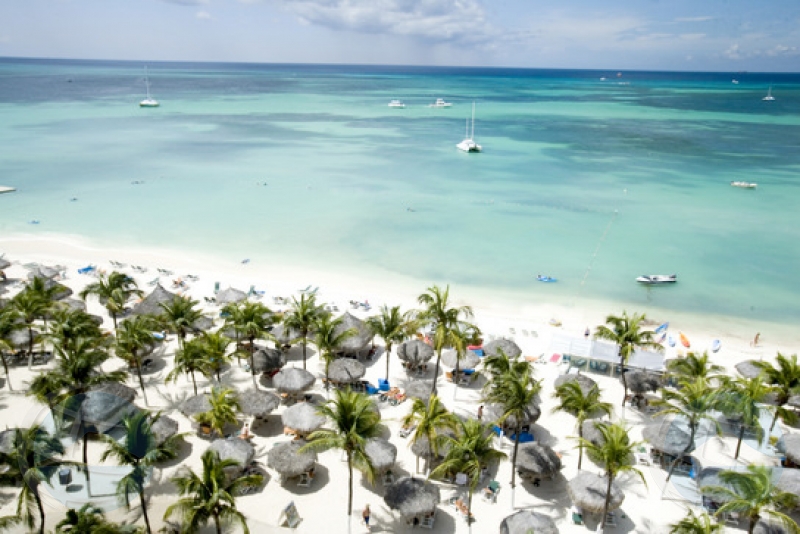
All-inclusive, what is it about?
ADVERTORIAL
All-inclusive, what is it about?
What started some years ago as some isolated cases, we see more and more all-inclusive resorts being established in Aruba.
All-inclusive hotels offer one flat price for stay, food and drinks for a given period, usually a week. The visitor then if so desired can bring an empty wallet, if the airport transfer is also either included or prepaid.
All-inclusive stay is based on the same principles as all you can eat facilities. We see nowadays even higher end chains offering all-inclusive stay. The hotels will compete on price and volume. Quality of services and goods offered to the guest become of lesser importance. Also, what is really important to notice that this type of resorts you will see in predominantly less/lower developed economies where corruption and a weak tax system are present.
The impact of all-inclusive hotels can be felt in a variety of important fields. Three of them namely on government finance, the labor market, the local suppliers (the support industries) and tourism.
ü Government finance.
The direct impact on the revenues of the government are clearly negative, i.e. the revenues will be less compared to non-all-inclusive stay. Reasons for this are:
All-inclusive stay is prepaid in the country of booking, making tax evasion/avoidance difficult to combat. The Panama papers have shown how also these hotels make use of them.
The prices of the goods offered are also lower because of lesser quality, generating less import duties. The same is the case with two important indirect taxes namely the BBO and the HAZV, which will be lower than otherwise.
There is also an indirect negative impact on the government revenue. Because less goods are bought at the local suppliers, there will be less locally paid profit and income taxes.
ü The labor market.
The demand for labor by all-inclusive hotels are different than non-all-inclusive hotels. Tourism is a service industry. Is service of secondary importance, then this means that the demand for labor by all-inclusive hotels is more focused on the price i.e. the lowest wag possible. Another factor in the demand for labor is that there are far less managerial positions necessary and the relatively small number of the managerial positions tend to be filled by expats, already employed by the hotel chain.
ü The local suppliers.
The third tangible impact is on the local suppliers. The development of the tourist industry created ample opportunities for the local business community, which were seized by mainly local entrepreneurs. It has resulted in such a support industry for tourism, that this in itself has become a main factor for tourism in Aruba. Visitors not only come for the beaches and the weather, but also for the fine dining and shopping.
ü The impact on tourism
With the increase in all-inclusive stay, the local business community that is supporting the tourist industry already feels it impact.
The visitor that opts for all-inclusive stay, is only interested in the price and what facility is offered. The all-inclusive hotel will, depending on its “quality rating”, will then offer the lowest possible service and goods for that category rating.
The supporting industry depends heavily on the preferences of the visitors. If in increasing numbers they are willing to spend less and less apart from the prepaid all-inclusive stay, the supporting industry may be forced to also focus more on quantity and volume rather than on quality and service, leading to continuous lowering of quality and service. It may well result in the support industry becoming a liability for tourism instead of an asset what is supposed to be.
Unless the growth of the all-inclusive stay is halted, Aruba risks ending up in a market that shows parallels with what is known in the second hand car market as the market for lemons.